he Midjourney class action settlement in January 2026 didn’t resolve the copyright questions production teams actually face — it just made the ambiguity official. The settlement included no admission of wrongdoing, no clarification on training data legality, and no guidance on downstream liability when AI-generated assets enter commercial work. If you’re running a content operation that uses AI tools at scale, you’re operating in a documented gray zone with no legal cover.
I’m not a lawyer and have no legal knowledge other than to say that we should be watching out for our products.
The Settlement Left the Hard Questions Unanswered
Midjourney agreed to pay $1.2 million and implement opt-out mechanisms for artists, but the settlement explicitly avoided ruling on whether training on copyrighted images constitutes infringement. Every production team using image generators, video synthesis tools, or AI-assisted editing is still making a bet on how courts will eventually interpret fair use in the training context.
If you’re using Runway, Pika, or similar tools to generate B-roll, backgrounds, or motion elements that ship in client work, you’re creating a chain of liability that no one in the pipeline can definitively assess. Your client doesn’t know if the asset is defensible. You don’t know if the model was trained on work that will later be deemed infringing. The platform itself just settled a case without admitting fault.
This is the operational reality in mid-2026: AI-generated content is everywhere in production workflows, but the legal framework is still being litigated one settlement at a time. Teams that automate at scale are the ones most exposed, because volume multiplies risk.
Scale Turns Ambiguity Into Liability
When you’re generating one image for internal concepting, the copyright risk is theoretical. When you’re batch-processing 500 personalized video assets a week using AI-generated elements, you’ve built a system that could fail all at once if the legal ground shifts.
The Midjourney case set a precedent for how platforms will respond: pay enough to make the case go away, change nothing about how the tool works, and leave downstream users to manage their own risk. That’s not a criticism — it’s the structure of the deal.
You can’t rely on the platform’s terms of service as a shield. Midjourney’s ToS grants users rights to the output, but that grant is only as strong as Midjourney’s own legal position. If a court later rules that the training data was infringing, the rights you were granted may not hold. You’re not insulated by the platform — you’re inheriting its unresolved exposure.
The teams handling this best treat AI-generated assets the same way they’d treat stock footage from an unknown source: usable for internal work and concepting, but requiring human-created alternatives before anything ships to a client. That’s not a legal opinion — it’s a production decision that keeps liability contained.
The Real Cost Is in the Workflow, Not the Tool
The immediate response to the Midjourney settlement was a wave of “we’re pausing AI tools until this gets clearer.” That’s the wrong frame. The tools aren’t going anywhere, and the legal ambiguity isn’t resolving anytime soon.
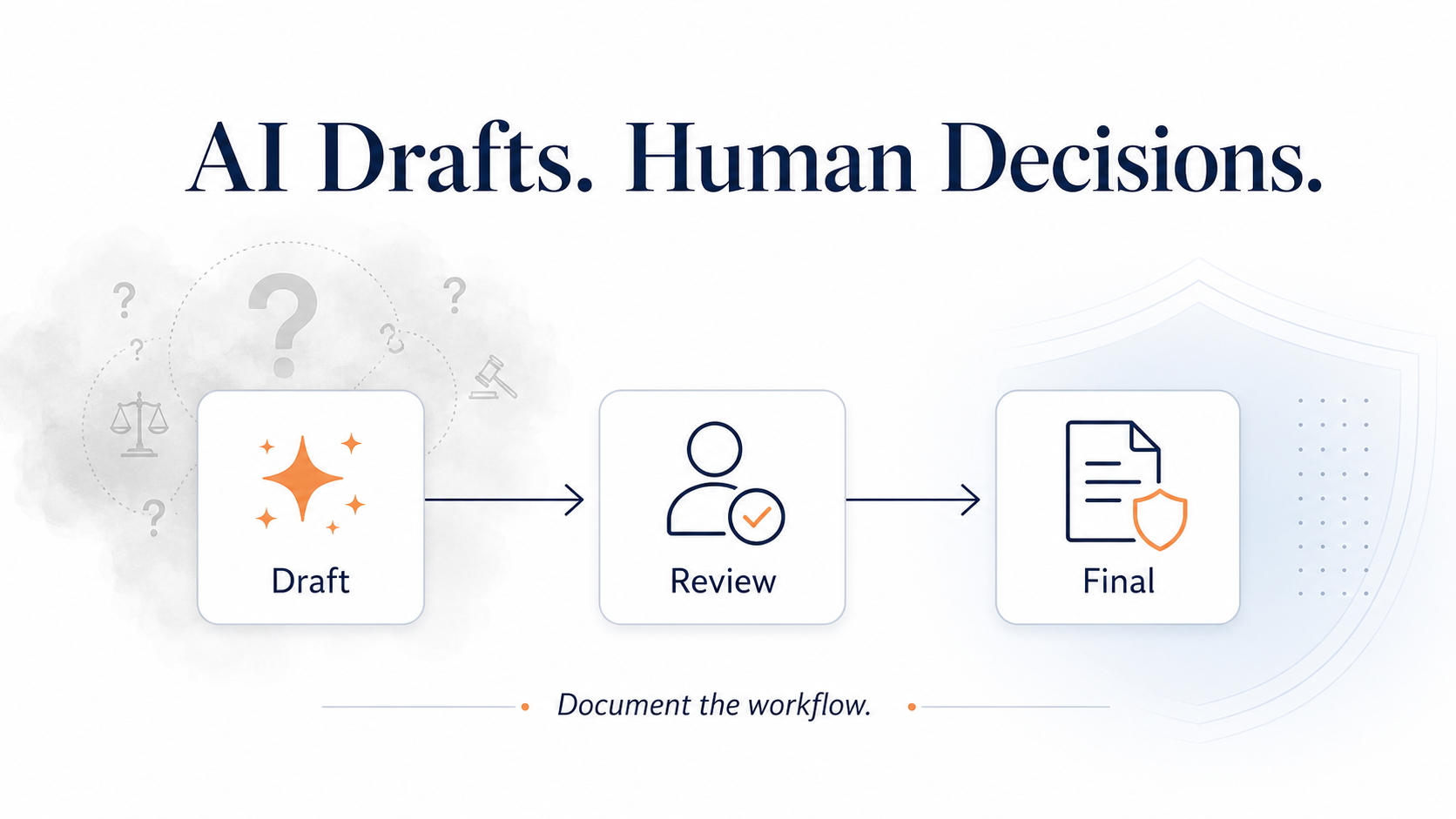
The question isn’t whether to use AI in production — it’s how to structure workflows so that ambiguity doesn’t compound. Use AI tools to accelerate the rough-cut phase, but require a human decision point before any AI-generated element becomes final. That means using Runway to generate three versions of a background plate, then having a designer choose one and modify it enough that the output is defensibly transformative. It means using AI to generate 50 headline variations, then having a writer select and edit the final five. The AI does the volume work, but a human makes the call and adds the layer that shifts the output from generated to authored.
This isn’t about ethics or craft — it’s about creating a defensible audit trail. If you’re ever asked to prove that a piece of content isn’t just unmodified AI output, you need to be able to point to the human decisions and modifications that happened after generation. That’s the operational layer most teams haven’t built yet, and it’s the one that will matter if the next settlement goes differently.
What Changed After January 2026
Document your workflow. If you’re using AI tools in production, create a written record of where they’re used, what review happens after generation, and what modifications are made before anything ships. That documentation won’t eliminate risk, but it’ll give you a position to defend if a client or opposing counsel asks how a piece of content was made.
Treat AI-generated assets as drafts, not finals. The moment you start batch-processing AI output directly into client deliverables without human review, you’ve built a system that assumes the legal question is settled. It’s not.
The Midjourney settlement made it clear that platforms will settle rather than litigate the core copyright questions. That means the ambiguity is structural, not temporary. Build workflows that assume the gray zone is permanent.
About the Author
Kevin Baer is VP of Production at CGI Digital in Rochester, NY, with 26 years in video production and motion graphics.