
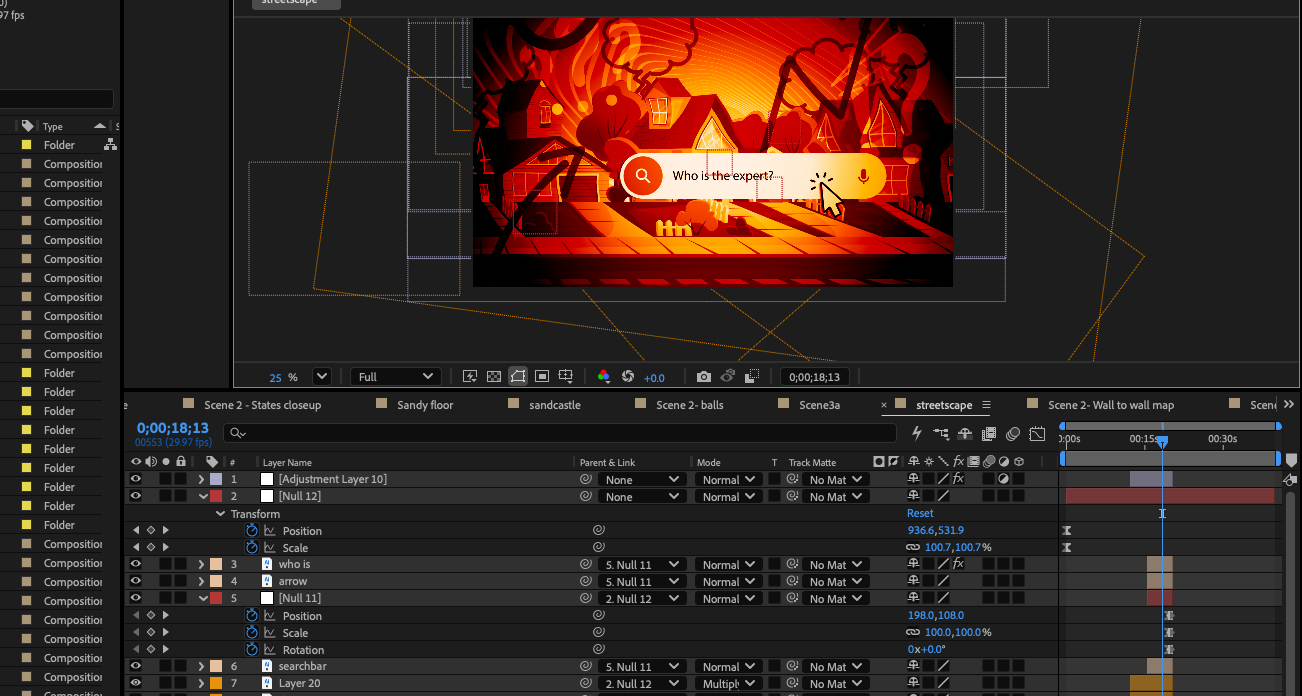
Shot sequences fail because they’re built around coverage, not causality.
Most editors inherit a pile of footage shot to ensure “visual variety” — wide, medium, close-up, cutaway — and assemble it into something that looks professional but doesn’t actually tell a story. The shots change, but nothing progresses.
The viewer sees motion without meaning, and the sequence collapses under its own weight.
Visual Variety Is a Safety Net, Not a Strategy
Visual variety exists to solve a technical problem: you need enough footage to cover edits, hide mistakes, and keep the frame from going stale. It’s a valid concern.
But it’s a floor, not a ceiling.
When variety becomes the goal, you end up with sequences that feel like they’re cycling through angles because the editor ran out of ideas. Wide shot to establish. Medium shot because we haven’t used one in a while. Close-up because it’s been too long since we saw a face.
The rhythm is arbitrary. The viewer senses it.
I’ve seen this pattern most clearly in corporate explainer videos. The script is tight, the voiceover is clean, but the visuals are just… there.
A person gestures. A screen lights up. Hands type on a keyboard.
None of it connects to what’s being said. The shots are present, but they’re not load-bearing. You could shuffle them and lose nothing.
Visual Storytelling Requires a Question the Viewer Needs Answered
A shot sequence works when each shot answers a question the previous shot created. Not a question you invented for the viewer, but one the viewer actually has in the moment.
Say you open on a woman staring at a laptop, frowning. The viewer’s question is: what’s on the screen?
If the next shot is a close-up of her hands typing, you’ve ignored the question. If the next shot is the screen showing an error message, you’ve answered it — and created a new question: what does she do now?
This is the mechanism behind visual storytelling. Each shot either answers the active question or introduces a new one that matters more.
When you break that chain, the sequence stops working. The viewer doesn’t consciously notice, but they stop leaning in.
The problem is that most shot lists are written before anyone knows what question the viewer will have. They’re written to ensure coverage, not to build a chain.
So you end up with footage that’s technically complete but narratively inert.
Cutaways Are Where the System Breaks Down
Cutaways are the most abused tool in video editing.
They’re supposed to provide context or breathing room, but they’ve become a dumping ground for footage that doesn’t belong anywhere else.
A cutaway works when it answers a question or adds information the viewer needs to understand what happens next. A character mentions a letter. Cut to the letter on the table. That’s a functional cutaway.
It’s not decorative. It’s doing work.
Most cutaways don’t do work. They’re inserted because the editor needs to cover a jump cut or because the sequence feels too static.
So you get a shot of a coffee cup, or a plant, or someone walking down a hallway — images that are visually pleasant but narratively empty. The viewer’s brain registers the interruption and has to reorient when you cut back.
The worst version of this is the “lifestyle B-roll” that gets layered over interview footage. Someone is talking about leadership, and you’re watching slow-motion shots of people shaking hands in a sunlit office.
The images are generically aspirational, but they have no relationship to what’s being said. They’re visual variety without visual storytelling, and the disconnect is obvious.
The Test Is Whether You Can Defend the Order
If you can’t explain why shot B follows shot A — not in terms of coverage or pacing, but in terms of what the viewer learns or feels — the sequence isn’t working.
This is the test I use when reviewing edits. I’ll point to a transition and ask: why this shot now?
If the answer is “because we needed a close-up” or “because it looked good,” the sequence is running on variety, not story. If the answer is “because the viewer just saw X and now needs to understand Y,” the sequence has a spine.
The hardest part of this work is that it requires you to think like a viewer who doesn’t know what’s coming. You’ve seen the footage a hundred times. You know the script by heart.
But the viewer is encountering it cold, and their attention follows a logic you have to anticipate and serve.
Most sequences fail because the editor is solving for their own experience — making sure the frame stays interesting, the pacing feels right, the coverage is used — rather than the viewer’s. The result is technically competent and narratively flat.
What to Do Instead
Before you shoot, write the sequence as a chain of questions and answers. Not a shot list — a logic map.
What does the viewer need to see first? What question does that create? What shot answers it? What question does that create?
If you inherit footage that wasn’t shot this way, your job is to find the chain that’s hiding in the material. Not every shot will fit. That’s fine.
A tight sequence built from six shots will always outperform a loose sequence that uses all twelve.
The difference between visual variety and visual storytelling is whether each shot earns its place by moving the viewer’s understanding forward. Variety is a production checklist.
Storytelling is a chain of cause and effect
Kevin Baer is VP of Production at CGI Digital in Rochester, NY, with 26 years in video production and motion graphics.