
A bakery owner in Portland showed me her analytics dashboard last month, beaming at a video with 12,000 shares. When I asked how many new customers it brought in, she paused. “I don’t actually know,” she admitted. The video was a feel-good montage of community moments set to trending audio. Beautiful content. Zero business impact.
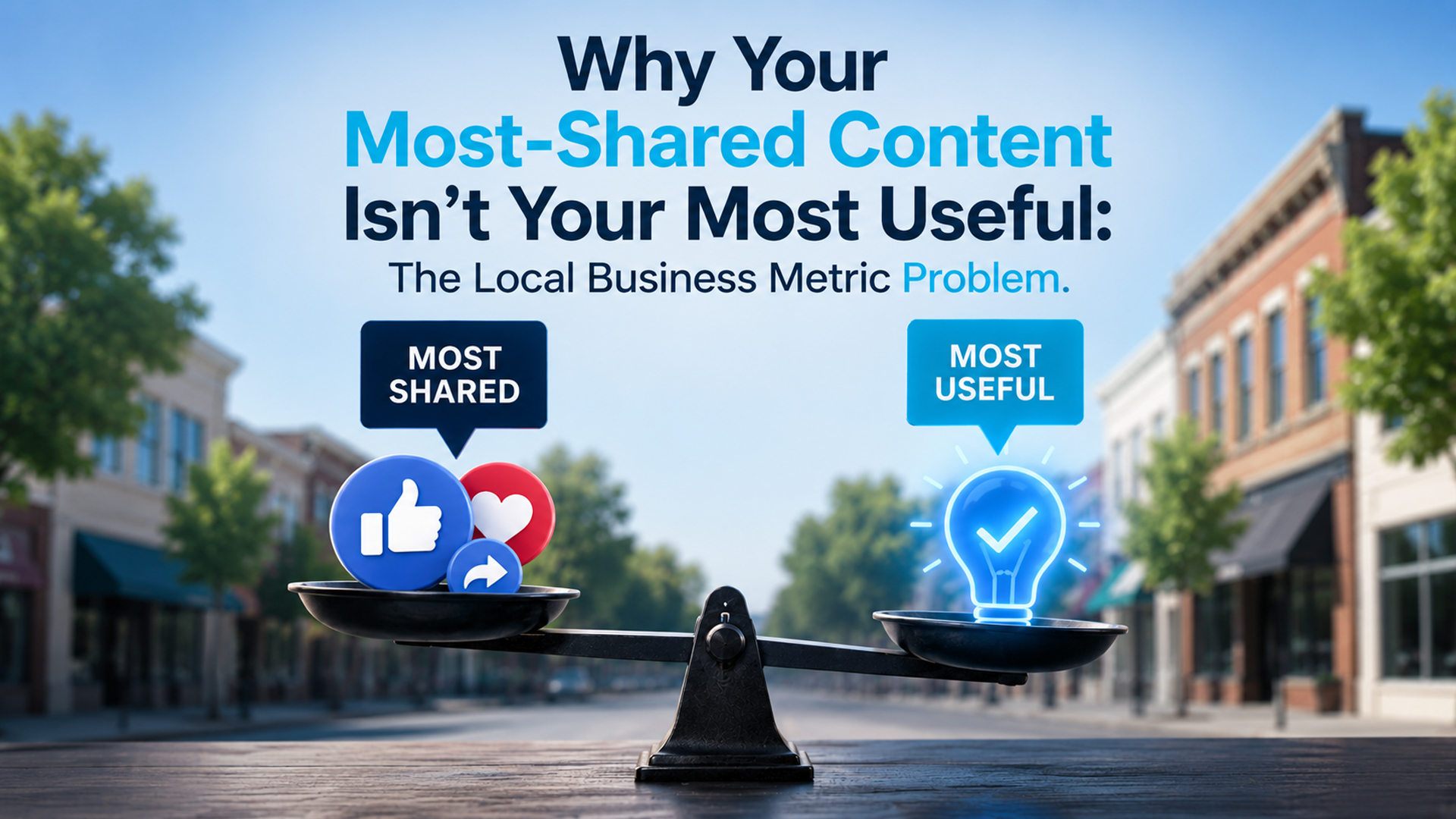
This happens because social platforms reward engagement, not utility. The metrics we see—shares, likes, comments—measure how content spreads, not whether it solves problems or drives decisions.
For local businesses, this creates a dangerous feedback loop. You optimize for virality instead of value.
The Engagement Trap Rewards the Wrong Behavior
Platform algorithms amplify content that keeps users scrolling. A quick emotional hit, a relatable meme, a controversy—these trigger shares.
A detailed guide to your service area’s permit requirements or a walkthrough of your pricing structure doesn’t.
I worked with a landscaping company that posted before-and-after photos of their projects. High engagement, steady shares. Then they published a breakdown of seasonal maintenance costs for different yard sizes in their county.
Shares dropped by 60%. Inquiry form submissions tripled that month.
The second piece answered the exact question prospects were researching. It didn’t entertain strangers across the country—it served potential customers in their market. The metrics looked worse. The business results were dramatically better.
Useful Content Solves Pre-Purchase Problems
When someone’s actually ready to hire a contractor, book a service, or choose a local vendor, they’re not looking for inspiration. They’re looking for answers to specific friction points: cost ranges, timelines, what to prepare, how to compare options.
A dental practice I consulted for had been posting oral health tips and staff spotlights. Standard content marketing. Then we created a guide explaining exactly what their new patient appointment included, how long it took, what insurance verification happened before the visit, and what to bring.
That single piece became their most-referenced asset in phone conversations. New patients mentioned it by name when booking. It never went viral. It sat on their website with modest traffic. But it removed the uncertainty that was preventing people from scheduling.
The content that moves someone from consideration to action rarely spreads beyond the people who need it right now. That’s not a flaw. That’s the point.
Local Relevance Doesn’t Scale, and That’s Fine
A video about “small business struggles” can resonate anywhere. A breakdown of your city’s specific business licensing process, the quirks of your county’s health inspection timeline, or the local suppliers you recommend—that’s only useful to people in your geography.
I filmed a piece for a restaurant explaining the farm partnerships they’d built within 30 miles and why certain menu items were only available seasonally based on those relationships. It got a fraction of the views their previous “day in the life” video received.
But it became the thing that differentiated them in a saturated market.
Prospective customers mentioned those specific farms when they called for reservations. They asked about the seasonal rotation. The content created informed customers who already understood and valued the restaurant’s approach before they walked in.
Shares measure breadth. Utility measures depth. For local businesses, depth wins.
The Metrics That Actually Predict Revenue
Track how many people move from content to contact. Not clicks—actual inquiries, bookings, purchases.
A plumbing company I worked with started logging which content pieces were open on prospects’ browsers during sales calls. The pattern was clear: people who’d read their service area response time breakdown and pricing philosophy converted at twice the rate of people who’d only seen their project galleries.
The galleries got shared more. The explanatory content got referenced during buying decisions.
Measure repeat engagement from the same users, not just total reach. If someone returns to your content multiple times, they’re likely in an active decision process. A single viewer who reads your content three times over two weeks is worth more than a hundred scroll-by shares.
Count how often your content gets cited in conversations—sales calls, emails, in-person visits. A home inspector started tracking this after noticing clients frequently mentioned his crawlspace assessment checklist during appointments. That piece had minimal social traction but was clearly driving qualified leads.
What to Publish When Shares Don’t Matter
Create decision-support content: comparison frameworks, cost breakdowns, process timelines, preparation checklists. The landscaping company’s seasonal cost guide. The dental practice’s new patient walkthrough. These don’t entertain—they inform at the exact moment information has value.
Document your specific market context. What’s unique about doing business in your city, your neighborhood, your service area? A contractor who explains local building code quirks or a retailer who maps out parking and access details for their specific location creates utility that can’t be replicated by national competitors.
Answer the questions that come up in sales conversations repeatedly. If you’re explaining the same thing to prospects every week, that’s your content brief. Record it once, publish it, reference it. It won’t go viral. It will save time and pre-qualify leads.
The Portland bakery owner eventually created a guide to custom cake ordering: lead times by season, how their pricing worked, what design consultations included, pickup logistics. It sits on their website with a few hundred views. But now when someone calls about a wedding cake, they’ve usually read it first. The conversations start further along, and the close rate’s higher. That’s the content that actually matters.
About the Author
Dave Evers is Director of Digital Content at CGI Digital in Rochester, NY.